



In discussions within Western political and policy circles about Iran’s future, Reza Pahlavi has increasingly been presented as a possible “alternative leader.”His opposition to clerical rule, rhetorical support for the separation of religion and state, and overtly pro-Western messaging may appear attractive at first glance. However, this appeal is rooted in short-term tactical thinking and fails to adequately account for serious long-term risks.
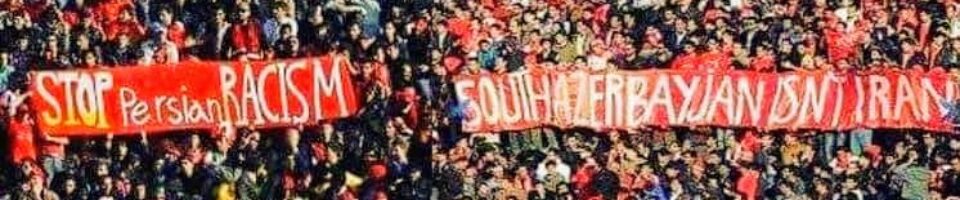
The Pahlavi political line is fundamentally anchored in strong centralist governance. It rejects federalism, regional autonomy, and local decision-making. Linguistic, cultural, and national diversity are treated not as assets but as threats. This worldview is built upon a Persian-centric, unitary state model that closely resembles a neo-fascist—understanding of the state, where the state exists for its own preservation rather than to serve society.

The Shah’s Army’s Military Invasion of the Azerbaijan Autonomous Republic, 14 December 1946
History has already tested—and disproven—this model. Reza Shah initially rose to power with Western backing and was viewed as a modernizer who could stabilize Iran. Yet over time, he pursued an independent great-power trajectory that conflicted with Western interests, (supporting Hitler) ultimately forcing his removal in 1941. The pattern is clear: the Pahlavi line begins aligned with the West, but eventually turns against it.

The Mass Execution of Members and Supporters of the Azerbaijan Autonomous Republic Following Its Suppression in December 1946
This pattern repeated itself under Mohammad Reza Pahlavi. When he was restored to power, he was marketed internationally as a democrat and a “lucky shah” who would modernize Iran. In reality, his rule evolved into one of systemic repression. Under his regime, mass atrocities and campaigns of state massacres were carried out against non-Persian populations, including South Azerbaijanis, Kurds, Arabs in Ahwaz, Khorasani Turkmens, Qashqai Turks, and others. Political dissent was crushed, identities were suppressed, and entire regions were ruled through fear, militarization, and cultural erasure.The result was not stability, but a society primed for revolution.

The Massacre Against the Qashqai in Central Iran carried out by the Shah’s Army
Today, reinstalling the Pahlavi model risks repeating this cycle. Clerical authoritarianism would likely be replaced not by genuine democracy, but by a secular authoritarian system with tight control over speech, thought, and political organization. Pressure on Turkish, Kurdish, Arab, and Baloch communities would intensify. Internally, repression would grow; externally, the revival of “Greater Iran” ideology would likely destabilize the region.
At the same time, Western media and strategic analysts increasingly discuss scenarios involving Iran’s weakening, decentralization, or fragmentation, with different regions pursuing distinct political paths. The Pahlavi project directly contradicts this reality. It seeks to reconstruct Iran as a highly centralized, expansion-oriented state, reducing Western flexibility and maneuverability in the region.
Conclusion
Reza Pahlavi may appear today as a familiar, manageable figure for Western policymakers. Yet his political trajectory carries the risk of producing another authoritarian Iran—one that is secular in form but coercive in practice, and potentially hostile to Western interests in the long run.History offers a clear warning:Leaders with imperial ambitions may begin as allies—but they inevitably become liabilities.
BY: Haqan Turkel
NOTE: The images are original historical photographs. Color has been added through AI-based digital colorization.


